Office Relocation Checklist For Gladstone Businesses
A good office relocation checklist starts well before moving day. For Gladstone businesses, planning eight to twelve weeks ahead gives you time to coordinate removalists, IT, staff, access and equipment without leaving critical decisions until the last minute. The goal is simple: move everything safely while keeping disruption to customers and day-to-day operations as low as possible.
Whether you're relocating a small professional office or coordinating a larger commercial fit-out, assign responsibility early and work backwards from the date the new premises must be operational.
8–12 Weeks Out: How Should You Plan Your Office Move?
Start by confirming your moving date, new premises and the key people responsible for the relocation. One person should oversee the project, even if individual staff members manage areas such as IT, furniture, records or customer communications.
At this stage, your office move checklist should cover:
- auditing furniture, equipment and files
- identifying items to move, dispose of or store
- checking access at both locations
- creating a basic floor plan for the new office
- confirming building or loading-area requirements
- planning IT and telecommunications changes
- arranging your commercial removalist.
Engaging office removalists Gladstone businesses can work with early also gives you time to discuss the size and complexity of the move before the schedule becomes tight.
Don't automatically move everything simply because you already own it. Relocation is a useful opportunity to identify broken furniture, obsolete equipment and archived material that doesn't need valuable space at the new premises.
6–4 Weeks Out: What Should You Pack and Organise?
Once the overall plan is settled, move into the logistics phase. Confirm which furniture will fit the new layout and create an inventory of desks, chairs, cabinets, equipment and other significant items being relocated.
Start packing things the business doesn't need every day. Archived files, spare stationery, books, display materials and infrequently used equipment can usually be dealt with before active work areas.
Use a clear labelling system that identifies both the contents and where the item belongs at the new office. Labels such as "Accounts – Room 2" or "Reception – Front Desk" are more useful on moving day than a box simply marked "office".
If the new premises aren't ready for everything at once, temporary storage in Gladstone can help stage the relocation. This can be particularly useful during fit-outs, lease overlaps or moves where furniture needs to leave the old office before its final location is available.
This is also the time to confirm arrangements with suppliers, cleaners, trades and anyone else involved at either property.
The Week Before: What Are the Final Preparations?
The final week should be about confirming details rather than making major decisions. Check the moving schedule with your removalist and make sure building access, keys, lifts, loading areas and parking arrangements are organised. Walk through both premises and identify anything that could slow down the move, including narrow access points, stairs or unusually heavy equipment.
Staff should pack personal work areas and label everything according to the agreed system. Keep essential documents, keys, access cards and anything needed immediately after the move separate from general packed items.
Prepare a simple new-office floor plan for the moving team. If each workstation, department and storage area already has a destination, furniture and boxes can go to the right place immediately instead of being moved twice.
Finally, back up important business data before IT equipment is disconnected.
Moving Day: What Should You Expect?
On moving day, have one authorised person available at the old premises and another at the new location where possible. They can answer questions and make decisions without the removal team needing to track down different staff members.
A professional commercial move should follow the agreed sequence. Priority items and larger furniture can be handled according to the access plan, while labelled boxes and equipment are delivered to their designated areas.
Keep most staff away from active moving zones unless they have a specific role. Too many people trying to help can create congestion and make it harder to move large furniture safely.
If you're deciding between managing the relocation internally and bringing in experienced movers, our guide to what sets professional removalists apart from DIY moving explains some of the practical differences.
Before leaving the old premises, complete a final walkthrough. Check cupboards, storage rooms, kitchens, meeting rooms and other areas where smaller items are easily overlooked.
How Should IT and Office Equipment Be Handled?
IT equipment deserves its own plan because a desk and its computer may need to arrive together, but they require different handling.
Before disconnection, make sure critical data is backed up and cables are labelled so equipment can be matched to the correct workstation. Photographing cable arrangements can also make reconnection easier for straightforward setups.
Computers, monitors, printers and other sensitive equipment should be packed securely rather than placed loosely with general office contents. For specialist servers, communications systems or other technical infrastructure, coordinate the move with your IT provider and removalist so everyone understands who is responsible for disconnecting, transporting and reconnecting each component.
Plan the reconnection order around business priorities. Reception phones, internet access and essential workstations may need to operate before secondary meeting rooms or storage areas are fully unpacked.
Example: A Gladstone office with 15 workstations may not need every box unpacked before reopening. If internet access, phones, core computers and customer-facing areas are prioritised, essential staff can potentially resume work while lower-priority storage and filing areas are still being organised.
How Should You Communicate With Staff Throughout the Move?
Good staff communication prevents small uncertainties from becoming moving-day problems. Employees should know the moving date, what they need to pack, where they will work during the transition and when they are expected at the new location.
Give staff clear deadlines rather than simply telling everyone to "pack before the move". Explain which items employees handle themselves and which will be managed by the removal team. Customers, suppliers and other important contacts also need appropriate notice. Update your business address across relevant websites, directories, invoices, email signatures and other materials, and arrange mail redirection where required.
If operations will be unavailable or reduced during the move, communicate that beforehand. Customers are much easier to manage when they know what to expect.
How Do You Settle In and Minimise Downtime?
Minimising downtime during an office move depends heavily on the order in which you restore operations. Prioritise the things employees need to work: power, internet, phones, computers, essential files and key shared equipment. Decorative items and non-essential storage can wait.
Once those essentials are operating, work through the office systematically. Check that equipment has arrived, furniture is where it belongs and no important items are missing or damaged. Keep your inventory and floor plan available until the relocation is fully complete.
For larger relocations, consider moving in stages where practical. Some equipment or archived material can potentially move before the main office, while less critical items can follow afterwards.
The best office relocation checklist is ultimately one that protects business continuity rather than simply getting everything from one address to another. Planning early, assigning responsibilities and coordinating IT, staff and removalists gives your Gladstone business a much better chance of getting operational quickly at the new premises.
If you're planning a commercial relocation in Gladstone,
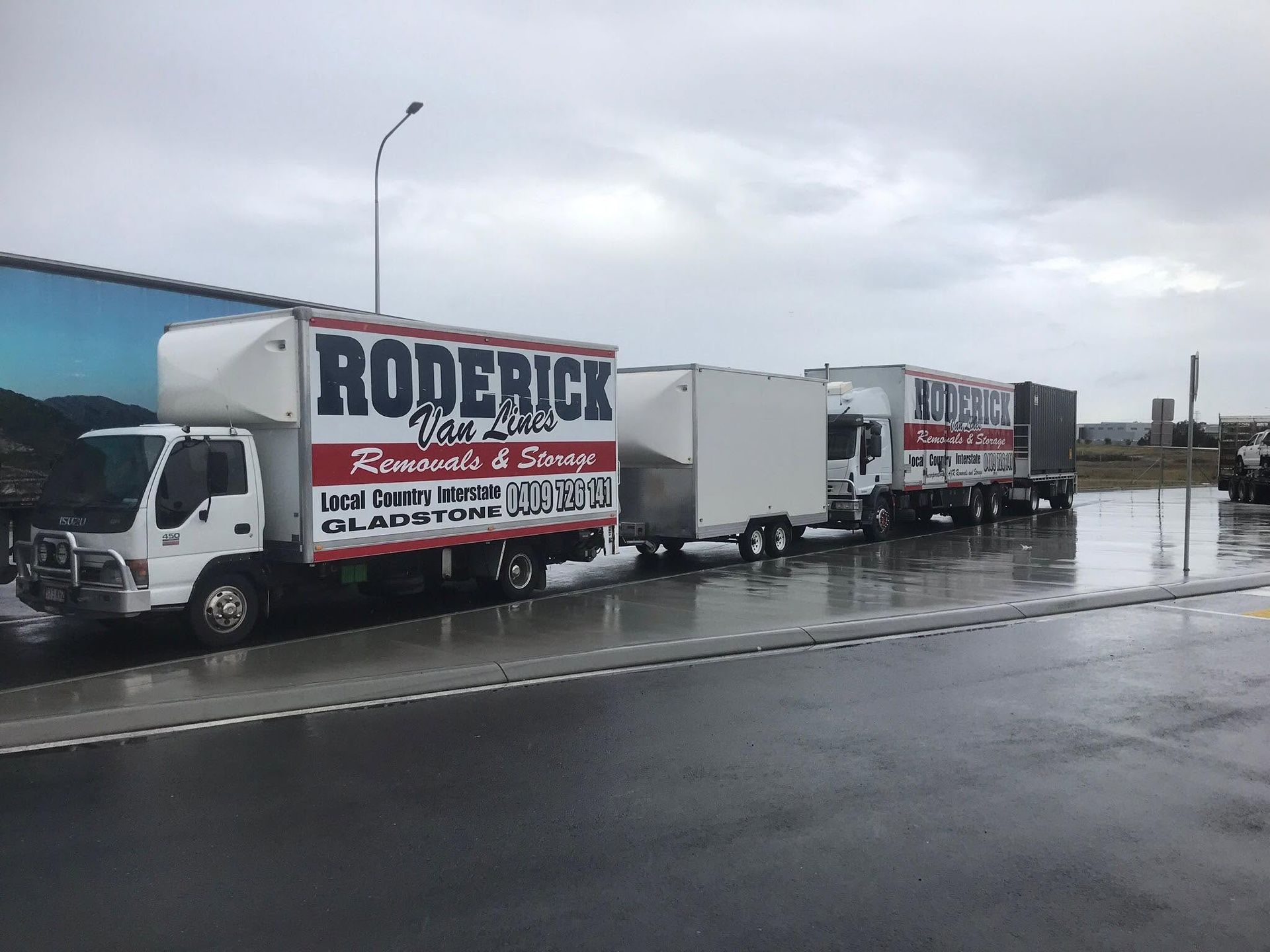
Roderick Removals can help coordinate the physical move around your business requirements.
Get in touch with our team early in the planning process to discuss access, furniture, equipment, storage and your preferred moving schedule.
Frequently Asked Questions
How far in advance should you plan an office relocation?
Starting around eight to twelve weeks ahead gives many businesses time to coordinate removalists, staff, IT and building access. Larger or more complex relocations may require additional planning.
How can a business minimise downtime during an office move?
Plan the relocation around operational priorities. Set up essential IT, internet, phones and customer-facing workstations first, and leave non-essential unpacking until core operations have resumed.
Should employees pack their own desks?
Employees can usually pack personal items and organise their own workspace contents, but the business should provide clear instructions and a consistent labelling system. Specialist equipment may require different handling.
What should be moved first during an office relocation?
The best sequence depends on the business, but priority should go to items needed to restore essential operations. Your removalist can coordinate the loading and delivery order around the new-office layout.
Can office furniture go into storage during a relocation?
Yes. Temporary storage can help where leases overlap, fit-out work isn't finished or the new premises can't accommodate everything immediately.